Description
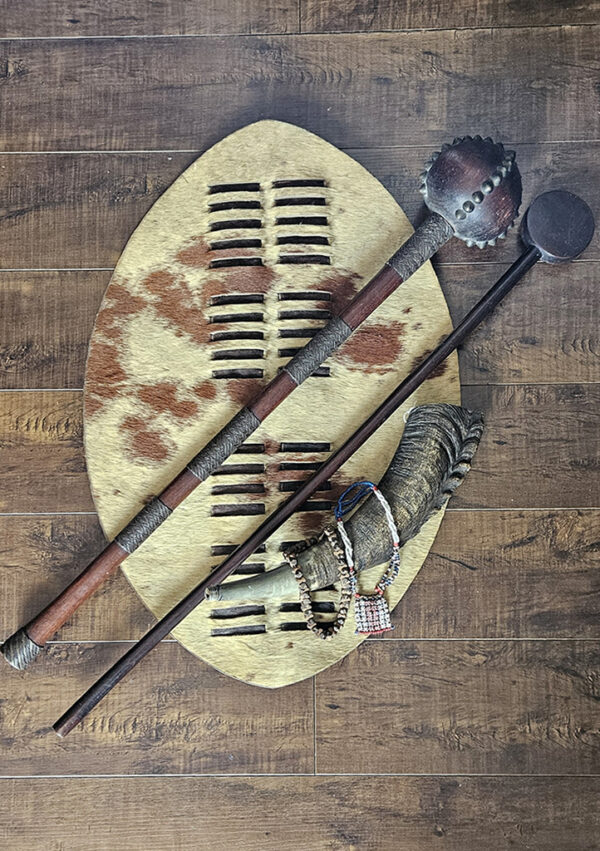
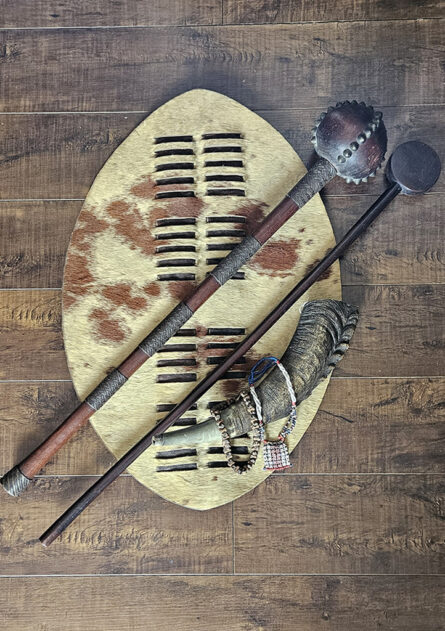
This exceptional 20th-century Zulu shield is a highly fascinating example of Nguni material culture, distinguished by its unique material composition and solid craftsmanship. While larger shields were utilized for open combat, smaller variants served precise ceremonial, social, and decorative roles within Zulu society. Measuring approximately 30 cm in length, this compact piece belongs to the class of shields known as Igqabu (or Igqasau), which were traditionally carried during formal ceremonies, traditional dances, and weddings.
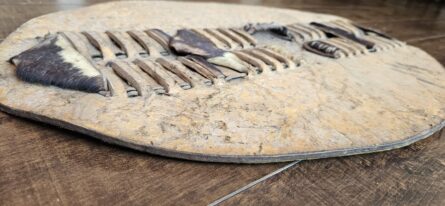
Unlike the more common bovine hide examples, this specific piece is expertly crafted from thick, robust antelope hide. The structural integrity is remarkably solid, highlighting the meticulous selection of materials by its maker.
Features of This Piece
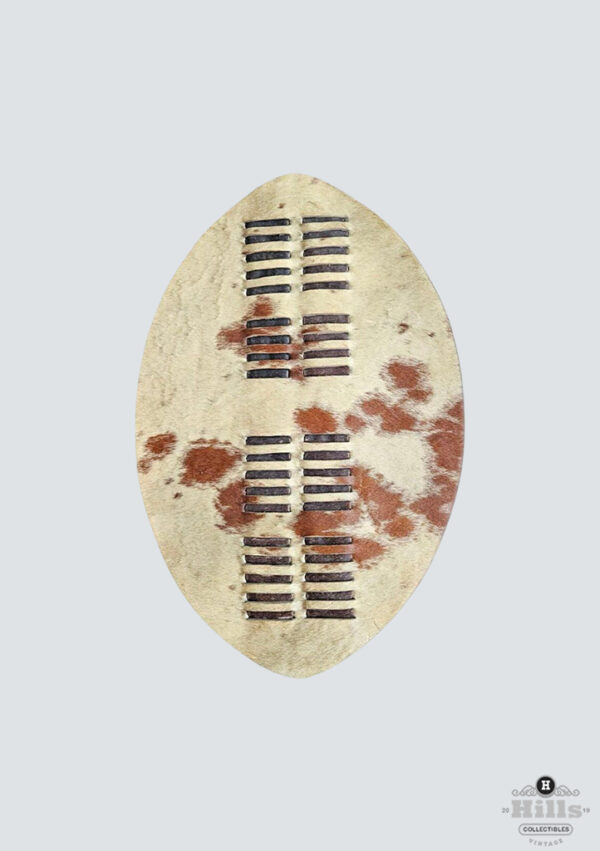
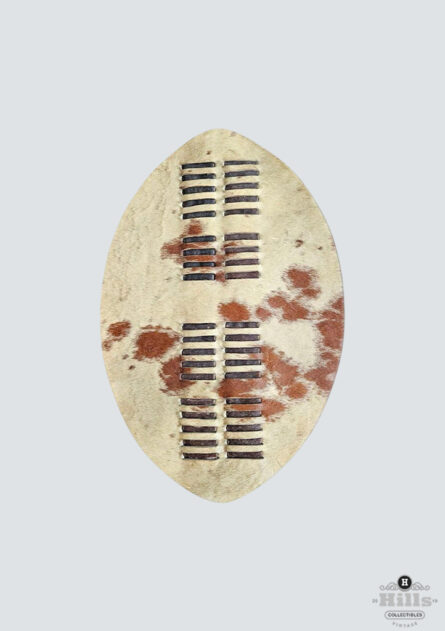
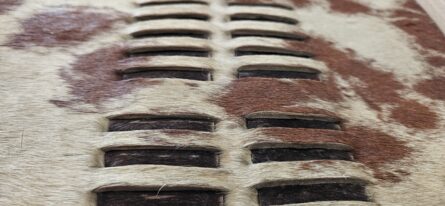
- Antelope Hide Construction: The face of the shield: visible in Zulu Antelope Hide Shield (Isihlangu) displays a striking, natural brindled and piebald hair-on pattern. The choice of antelope hide provides a unique texture and variation from standard Nguni cattle hide.
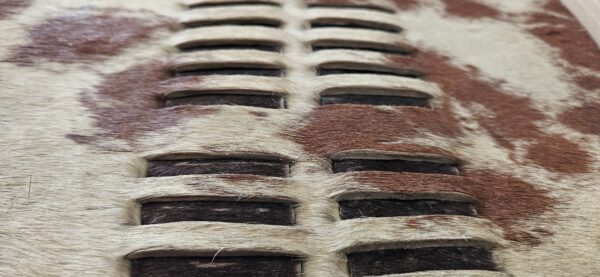
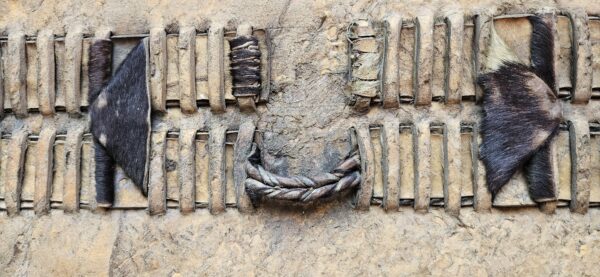
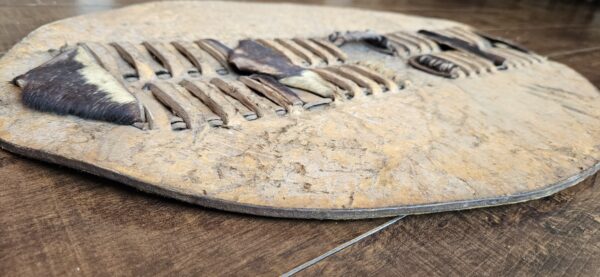
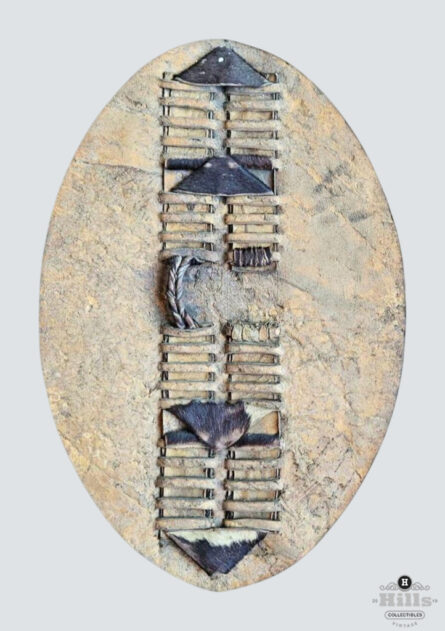
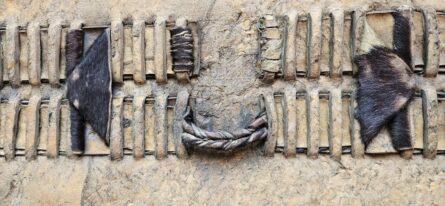
- Remarkable Thickness & Solidity: A close examination of the central structural reverse, as referenced in Zulu Antelope Hide Shield (Isihlangu) – bak.jpg, reveals the impressive thickness and rigidity of the seasoned hide, ensuring the shield retains its form perfectly.
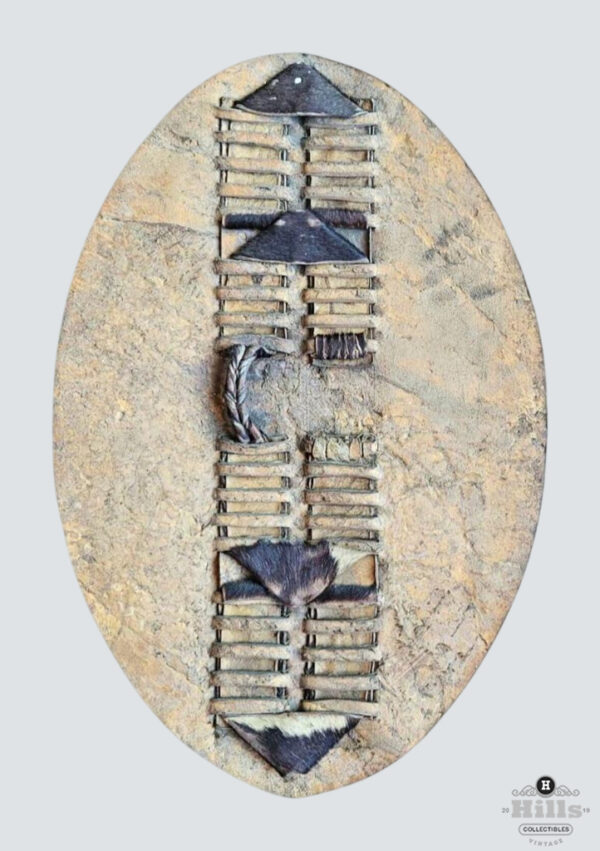
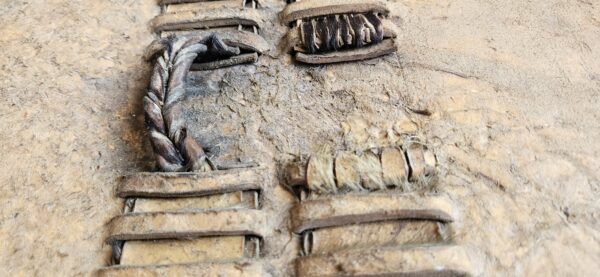
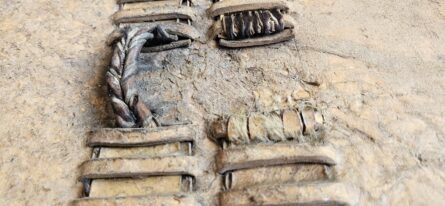
- Traditional Imigabelo Weaving: The reverse of the shield, detailed in Zulu Antelope Hide Shield (Isihlangu), showcases the traditional double rows of contrasting hide strips (imigabelo) intricately woven through vertical slits in the main body. These strips not only reinforce the center but create the foundational loops used to secure the central wooden support staff (umboko).
- Prestige and Preservation: Sourced from the UK market, this piece displays a beautiful, untouched patina across both the raw hide interior and the furred exterior, making it a stellar addition for discerning collectors of Southern African ethnographic art.
Within Nguni culture, shields are strictly classified by size, form, and societal function:
- Isihlangu: Large, classic war shields used in battle, traditionally spanning from the chin to the feet.
- Umbumbuluzo: A smaller, heavier, and sturdier war shield introduced during the late 19th century for more mobile, close-quarters combat.
- Ihawu: A medium-sized, highly portable shield primarily used by scouts, travelers, or for everyday protection.
- Igqabu / Igqasau: Small, highly curated decorative or ceremonial shields, such as this 30 cm specimen, proudly carried during dances, weddings, and elite status displays.