Rare Zulu All-Wood Prestige Ceremonial Spear (Umkhonto)
Rare Zulu All-Wood Prestige Ceremonial Spear (Umkhonto)
$3,000.00 Original price was: $3,000.00.$2,800.00Current price is: $2,800.00.
- Description
- More Details
- All-Wood Variant
Description
Product Highlights
- Origin: KwaZulu-Natal, South Africa
- Date: Early to Mid-20th Century
- Material: Monolithic carved hardwood (ironwood / native wild olive)
- Dimensions: Total length 113 cm (Blade length approx. 30 cm)
- Provenance: Private UK Collection / UK Market
- Condition: Superb antique condition. The wood exhibits a gorgeous, natural honey-to-chocolate vertical grain contrast with a lustrous, hand-burnished patina from decades of respectful handling.
Masterfully Carved from a Single Piece of Sacred Hardwood
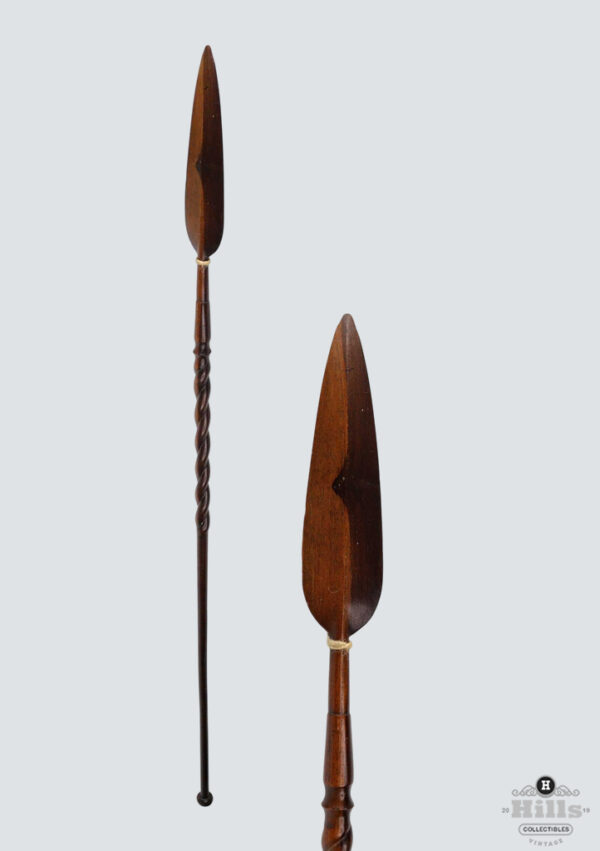
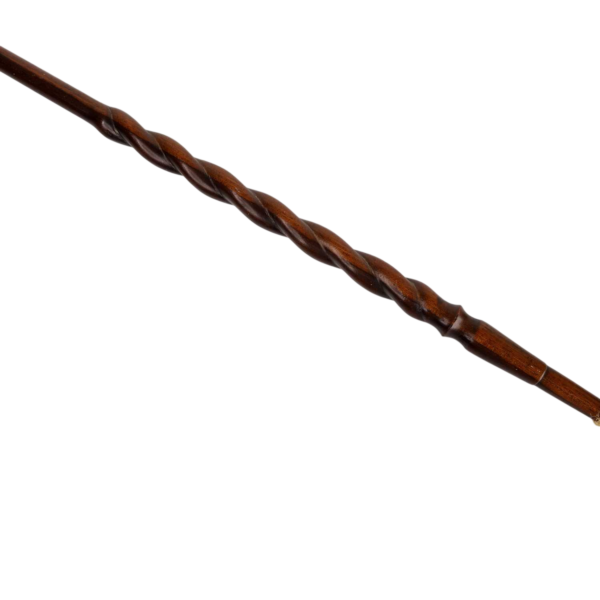
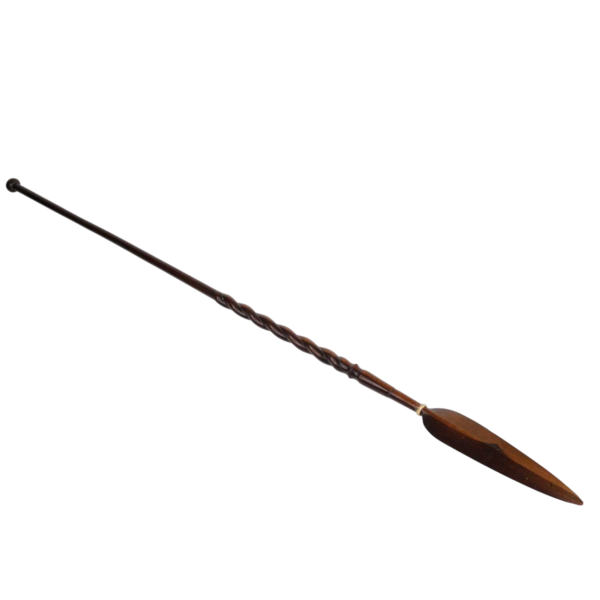
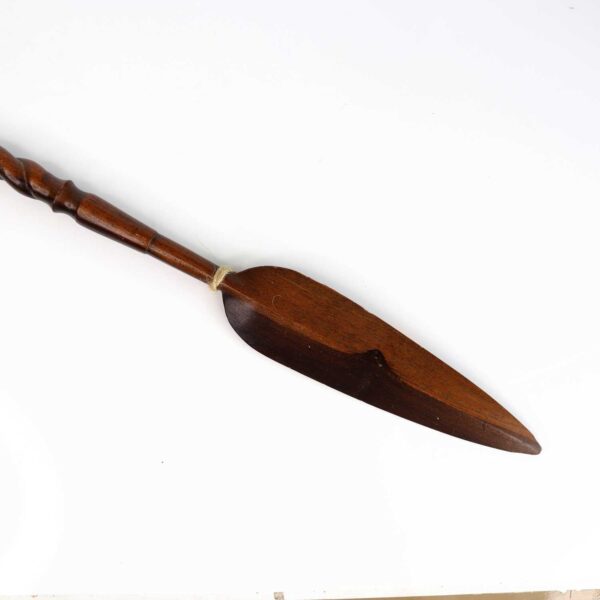
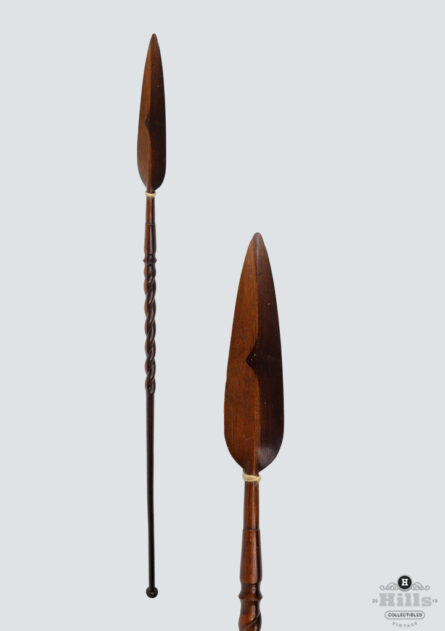
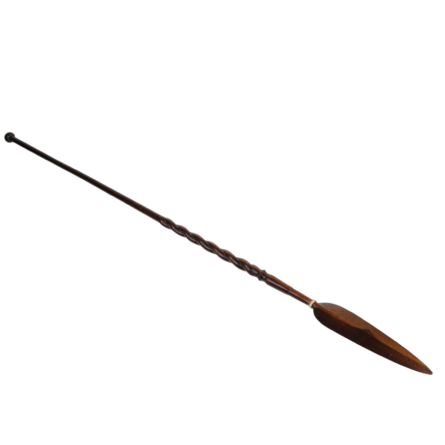
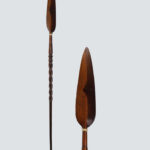
An absolute masterpiece of Southern African ethnographic art, this 113 cm prestige ceremonial spear (umkhonto) is carved entirely from a single, continuous piece of dense, rich African hardwood. Featuring an exquisitely sculpted, flattened leaf-shaped blade, a highly tactile spirally turned mid-shaft, and a classic spherical pommel terminal, this piece represents the pinnacle of early-to-mid 20th-century Nguni carving.
Design & Architectural Anatomy
The Leaf-Shaped Wooden Blade
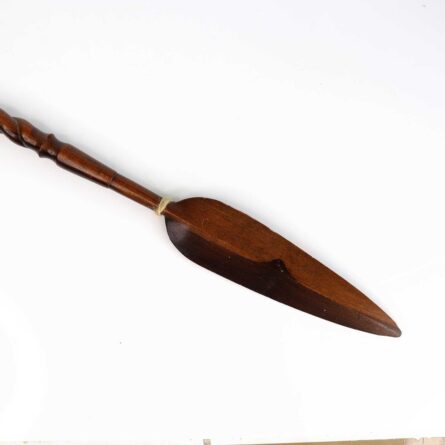
The focal point of this exceptional piece is the broad, flattened leaf-shaped blade. Seamlessly carved out of the same block of wood as the shaft, it mimics the form of the legendary Zulu iklwa (stabbing spear). The carver has achieved incredibly thin, symmetrical beveling along the “edges” of the wooden blade, showing off the dramatic dark-and-light heartwood contrast of the timber. A delicate string binding accents the base of the blade socket, a nod to the traditional sinew or wire binding used on iron-tipped spears.
The Spiral-Turned Mid-Shaft
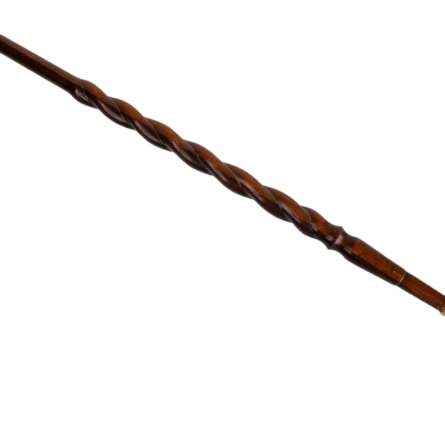
Toward the center of the 113 cm haft, the carver has introduced a deep, fluidly carved spiral twist. This design motif is incredibly difficult to execute symmetrically over a long, tapered cylindrical shaft. The polished raised ridges of the spiral contrast beautifully with the darker, textured recesses, offering a highly tactile grip and capturing the light dynamically when displayed.
The Spherical Pommel
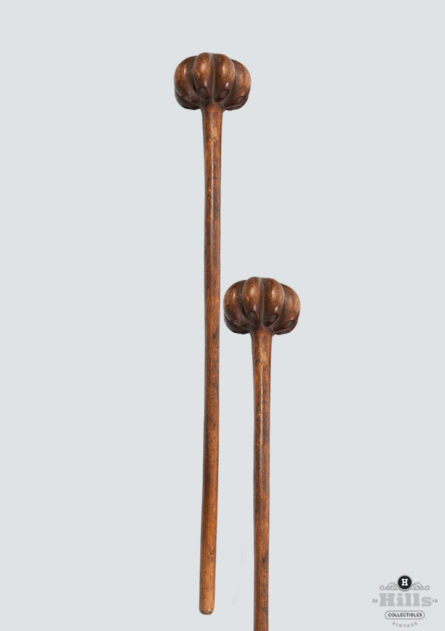
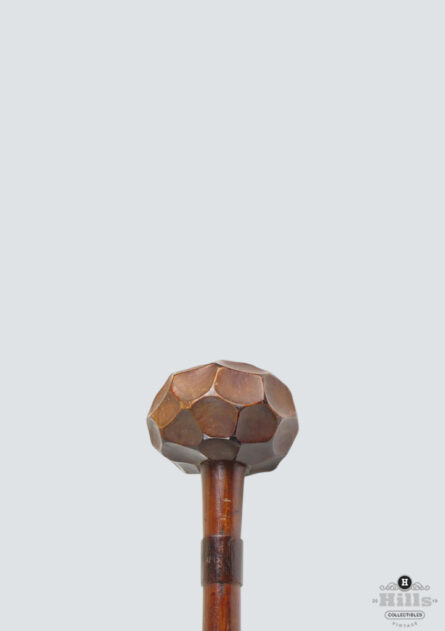
The spear terminates in a perfectly rounded, small spherical pommel (isihloko). This pommel not only acts as a visual and physical counterweight to the broad blade at the top but also echoes the form of the classic Zulu iwisa (knobkerrie), unifying the two most iconic Zulu prestige forms into a single, cohesive design.
The Importance & Meaning of the All-Wood Variant
To understand the true significance of this piece, one must look at why a Zulu carver would choose to fashion a spear entirely out of wood rather than utilizing a forged iron head:
1. A Symbol of Sacred Peace and High Diplomacy
While iron-tipped spears (iklwa and isijula) were designed for combat and hunting, the all-wood spear was explicitly a non-combat weapon of peace. Carrying an iron blade into an imbizo (a royal gathering, council of elders, or court assembly) could be seen as an act of aggression. An all-wood spear allowed chiefs, advisors (izinduna), and elders to carry a symbol of their defensive readiness and status without introducing a deadly weapon into a peaceful space. It designated the bearer as a man of law, diplomacy, and wisdom.
2. Spiritual and Ancestral Agency
Wood is a living medium. In Zulu cosmology, specific dense hardwoods like Umsimbithi (ironwood) or Wild Olive were believed to possess spiritual protective properties. A spear carved entirely of this “living” material served as an antenna to the ancestors (amadlozi). These spears were held during crucial life-cycle ceremonies—such as marriages (udwendwe), coming-of-age rituals, and ancestral veneration ceremonies—to ground the speaker’s words in truth and ancestral authority.
3. The Ultimate Test of Artistic Virtuosity
Forging an iron spearhead and fitting it to a shaft is a modular process. Carving a 113 cm spear with a broad, flat, thin blade entirely out of a single piece of wood, however, allows zero room for error. If the wood splits or the alignment is off by even a millimeter, the entire piece is ruined. Because these were commissioned by individuals of high status, only master carvers (izazi) attempted them. The complexity of the spiral shaft combined with the thin, unwarped blade made this spear an immediate indicator of the owner’s immense wealth and social prestige.
Collector’s Note
All-wood ceremonial spears of this length and quality are highly sought after by collectors of African art because they represent sculpture in its purest form. This piece stands as a breathtaking intersection of weapon design and fine wood sculpture.
Rare Zulu All-Wood Prestige Ceremonial Spear (Umkhonto)
$3,000.00 Original price was: $3,000.00.$2,800.00Current price is: $2,800.00.