Important 19th Century Zulu Engraved Cattle Horn
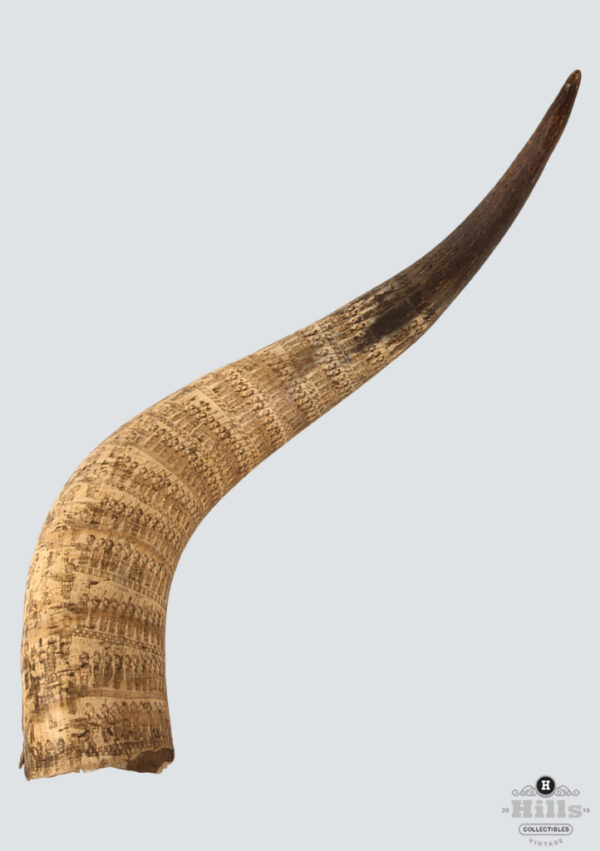
Important 19th Century Zulu Engraved Cattle Horn
- Description
- The Sovereign Lion's Ledger
- Provenance, Documental Integrity, and Legality
Description
-
- Platform Availability: Exclusively offered via HillsCollectibles.com
- Featured Showcase: Published and analyzed in depth on TribalArt.com as part of the prestigious Hero Artifact Series (Part 6).
- Direct Feature Link: Read the full scholarly analysis on TribalArt.com
Overview & Specifications
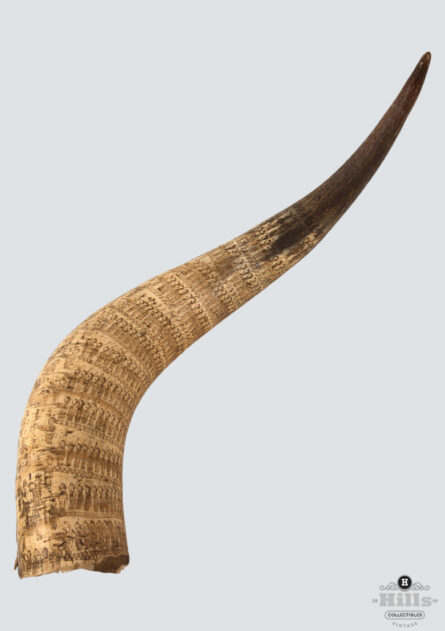
- Object: Fine-Line Narrative Engraved Prestige Cattle Horn
- Culture / Origin: Sovereign Zulu Kingdom, KwaZulu-Natal, South Africa
- Period / Date: Early 1880s (Documenting the Anglo-Zulu War of 1879)
- Medium: Polished Nguni Ox Horn with carbonized soot/fat infill
- Rarity Metric: One of only approximately 12 known examples worldwide
The Sovereign Lion’s Ledger
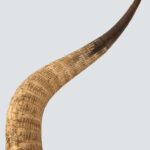
Hills Collectibles is profoundly honored to present what is arguably the most significant, museum-grade historical document of 19th-century Southeastern African material culture ever to enter the private market.
While the geopolitical outcomes of the 1879 Anglo-Zulu War were documented extensively by British imperial forces, this masterfully incised Nguni cattle horn offers a vanishingly rare, unmediated counter-narrative: the entire conflict recorded through the eyes and hands of an indigenous Zulu artist.
The Anatomy of the Master’s Hand
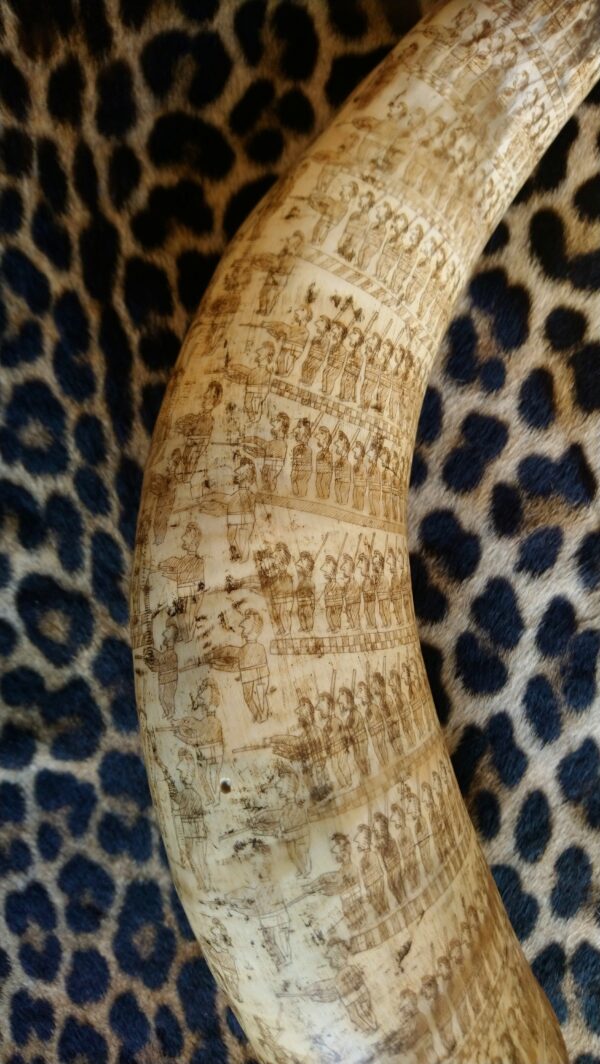
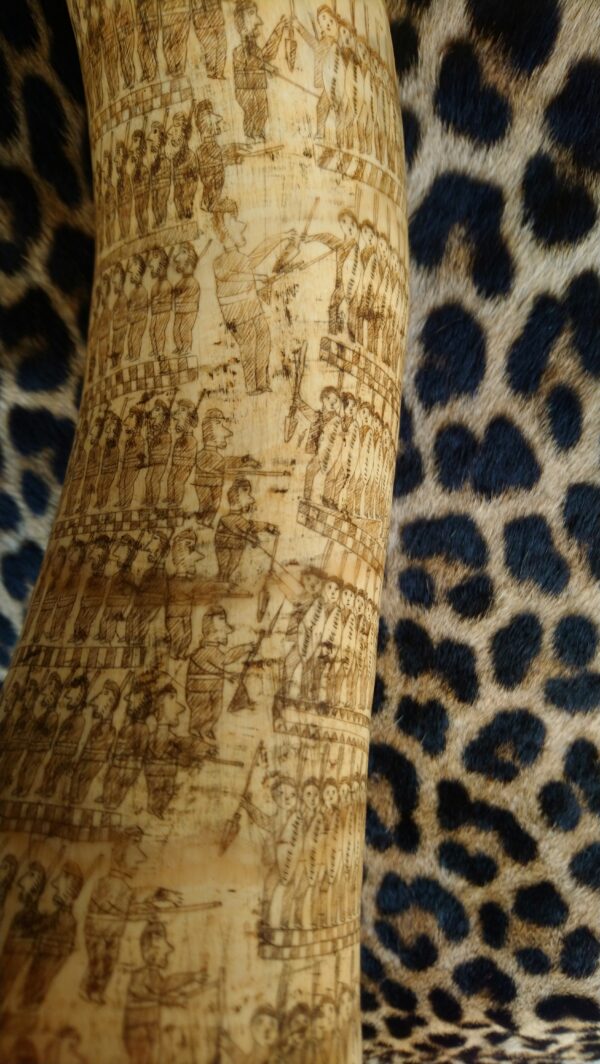
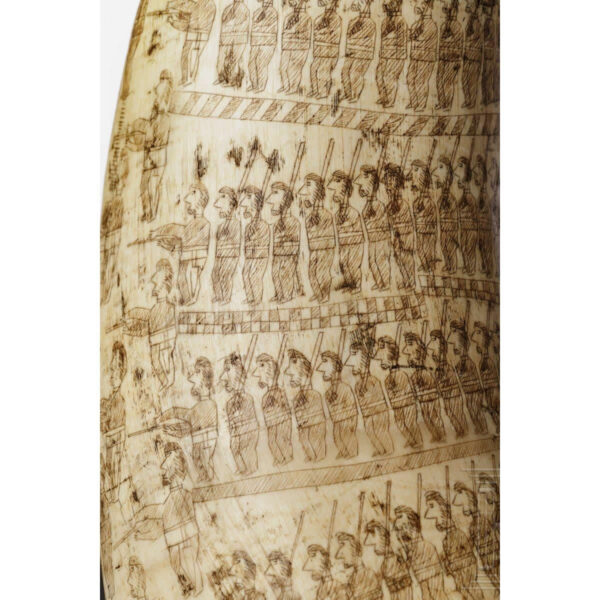
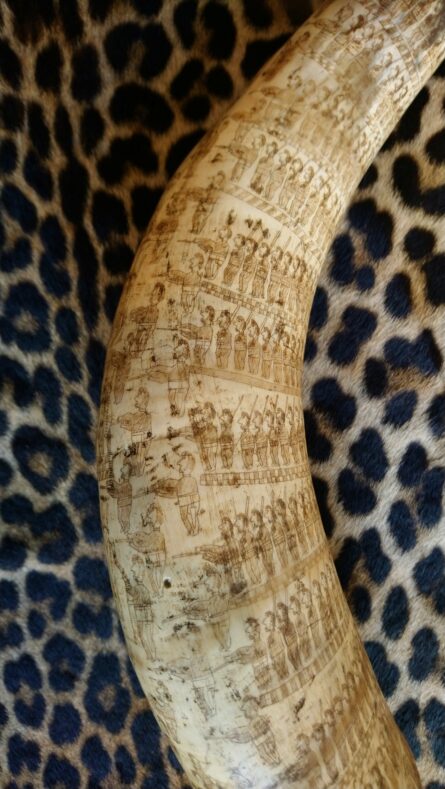
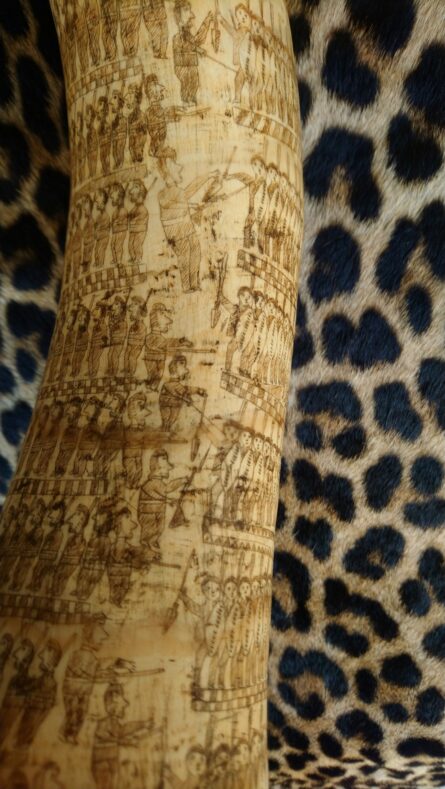
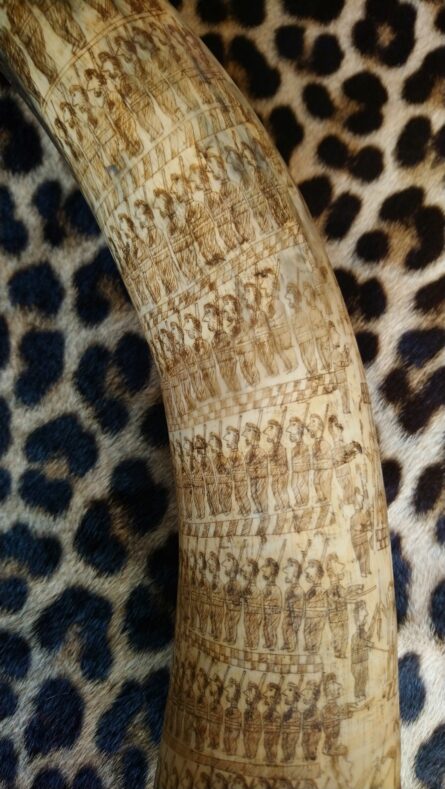
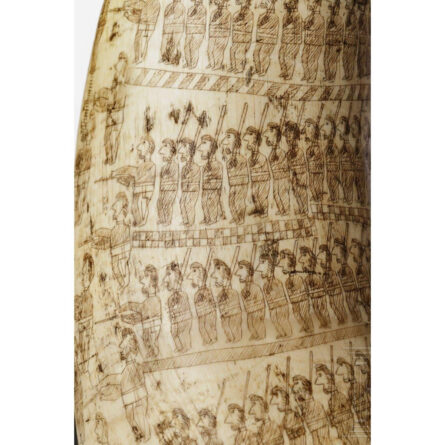
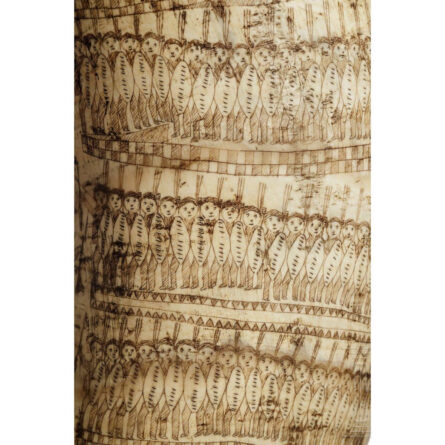
The surface of this exceptional horn was historically scraped smooth to create a pristine, light-reflective canvas. Utilizing an ultra-fine iron point, the anonymous Zulu master (historically active near the Newcastle district) incised dense, cinematic registers separated by meticulously executed checkered and cross-hatched borders. These lines were permanently blackened using a traditional application of carbonized soot and organic fat to create an extraordinary graphic contrast.
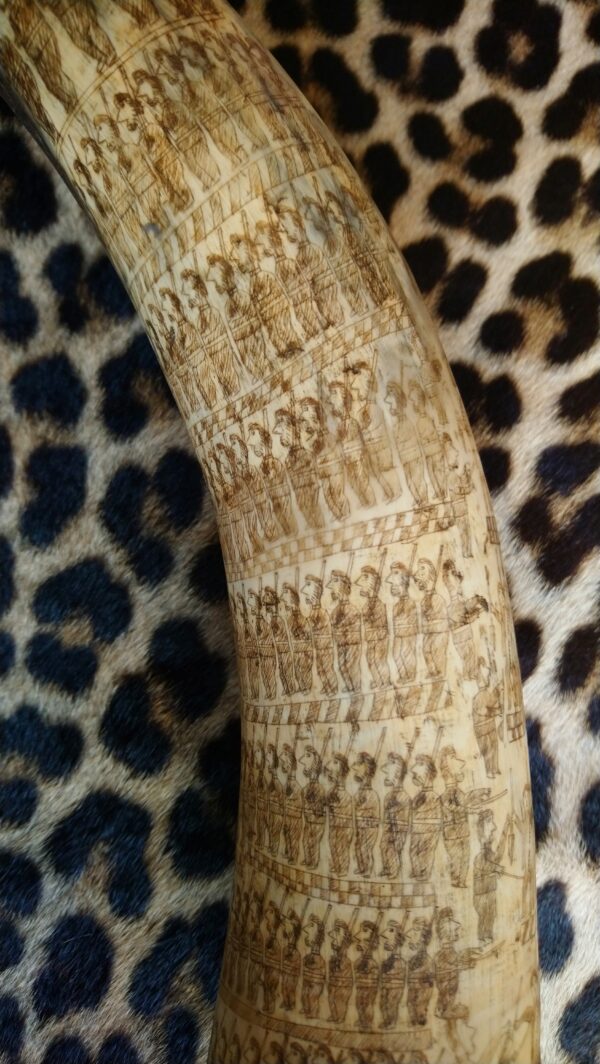
As you rotate the horn, a multi-axial history unfolds with staggering empirical realism. The artist has explicitly captured:
-
The Imperial Mechanics: Rows of British redcoat infantry marching in rigid formation, complete with highly specific regimental dress variants ranging from tropical helmets to Scottish Glengarry caps.
-
The Technological Clash: Highly detailed horse-drawn artillery carriages, limbers, and Gatling guns transitioning through mid-campaign thresholds.
-
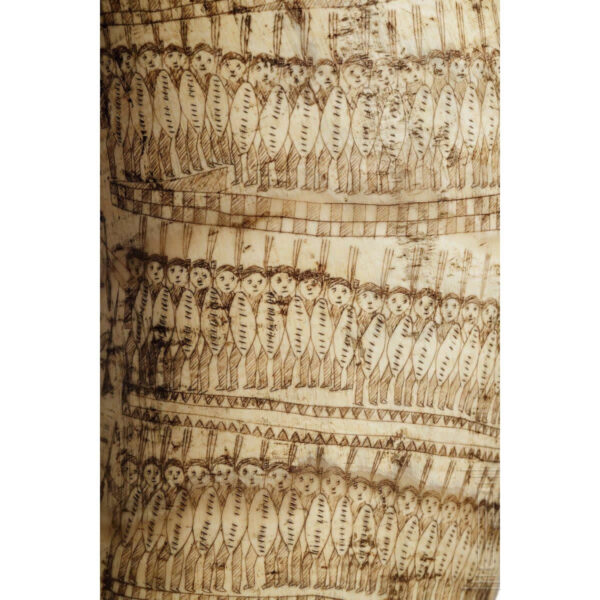
The Sovereign Resurgence: Columns of Zulu amabutho (warriors) standing shoulder-to-shoulder, carrying their iconic oval shields (izihlangu).
Artist Signature Diagnostic
A key forensic marker identifying this specific piece as a true work of the legendary Newcastle master is the rendering of the Zulu combat shields. While actual shields utilized a double row of central lacing to hold the wooden staff, this particular artist utilized a stylized, singular row of central lacing. This design reduction serves as his personal, un-counterfeitable graphic signature, distinguishing his hand from all other contemporary carvers of the 19th century.
Absolute Scarcity & Global Context
With a globally recognized corpus restricted to approximately twelve authenticated specimens, the opportunity to acquire a narrative Zulu horn is a once-in-a-generation event for high-tier collectors, institutions, and legacy investors. The only other surviving sister pieces from this exact master’s hand are fiercely guarded national treasures permanently housed in premier global repositories, including:
-
The British Museum (London, UK)
-
The Smithsonian Institution (Washington D.C., USA)
-
The Iziko Museums of Cape Town (South Africa)
Scholarly Repository & Foundational Sources
- Maggs, T. 1990: “A glimpse of colonial life through Zulu eyes: 19th century engraved cattle horns from Natal.” Natal Museum Journal of the Humanities, 2: 143-162. The foundational academic treatise that first brought this corpus to light, identifying the techniques, structural compositions, and profound historical importance of these narrative engravings.
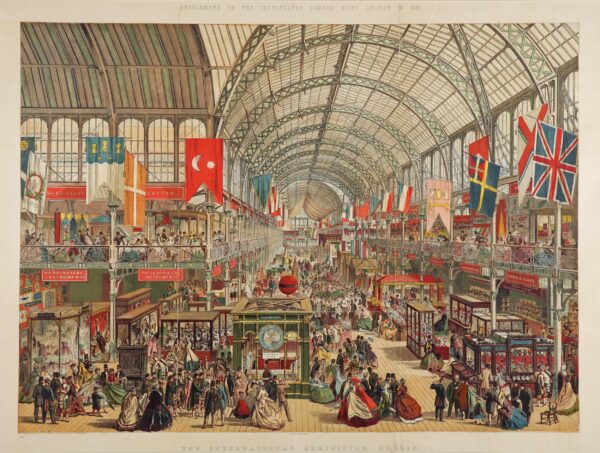
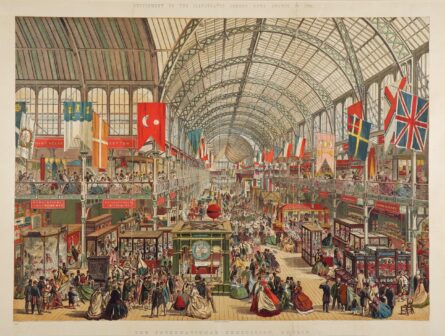
- Davison, P. 2005: “Visual Narratives of the Anglo-Zulu War.” Iziko Museums of Cape Town. This critical text maps the international distribution of the 12 known horns, detailing their manufacturing context near Newcastle for the 1886 Colonial and Indian Exhibition in London, and establishing their museum-grade institutional provenance.
- The British Museum Department of Africa, Oceania, and the Americas: Holds primary comparative reference pairs (e.g., Accession No: Af1960,08.1.a-c), providing the crucial forensic baseline for verifying 19th-century Nguni horn scraping, fine-line incising, and period-correct military iconography.
Provenance, Documental Integrity, and Legality
Hills Collectibles operates under a strict mandate of bulletproof custodial history and legal compliance. This investment-grade asset is accompanied by an unassailable documentation portfolio:
-
Origin: Field-collected within the historic boundaries of KwaZulu, South Africa.
-
Provenance: Sourced directly from the prestigious German Art Market, meticulously tracked through long-term private ownership, and free of any modern restitution claims.
-
Documentation & Certificates Included:
-
Certificate of Authenticity (COA): Full forensic and aesthetic validation guaranteeing the artifact as an authentic 19th-century indigenous Zulu masterwork.
-
Official Customs Clearances: Fully stamped, legal European and international import/export customs clearance documentation, ensuring frictionless global transport and institutional asset grading.
-
Academic Record: Complete archival cross-references to the foundational texts of Dr. Tim Maggs (1990) and Dr. Patricia Davison (2005).
-
Connoisseur Inquiry
This piece represents the absolute zenith of ethnographic crossroads collecting—appealing simultaneously to elite fine art connoisseurs, military historians, and institutional curators.