Alternative 1960s Rhodesian Tribal Headman’s Gorget
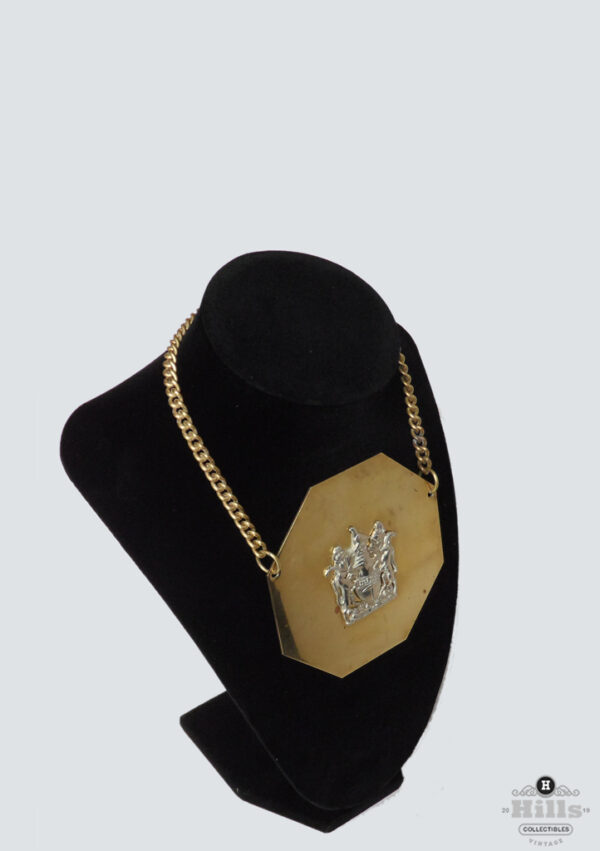
Alternative 1960s Rhodesian Tribal Headman’s Gorget
- Description
- Historical Context
Description
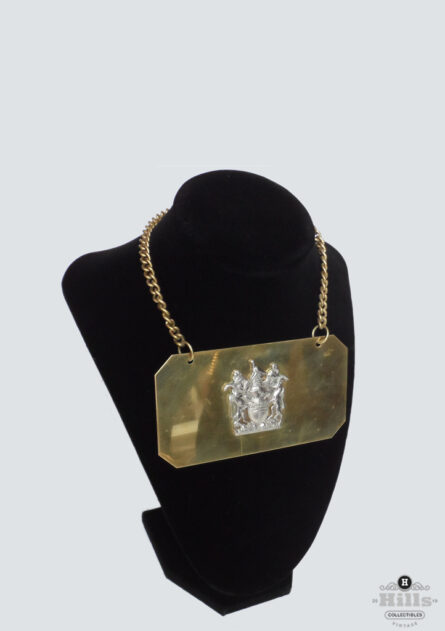
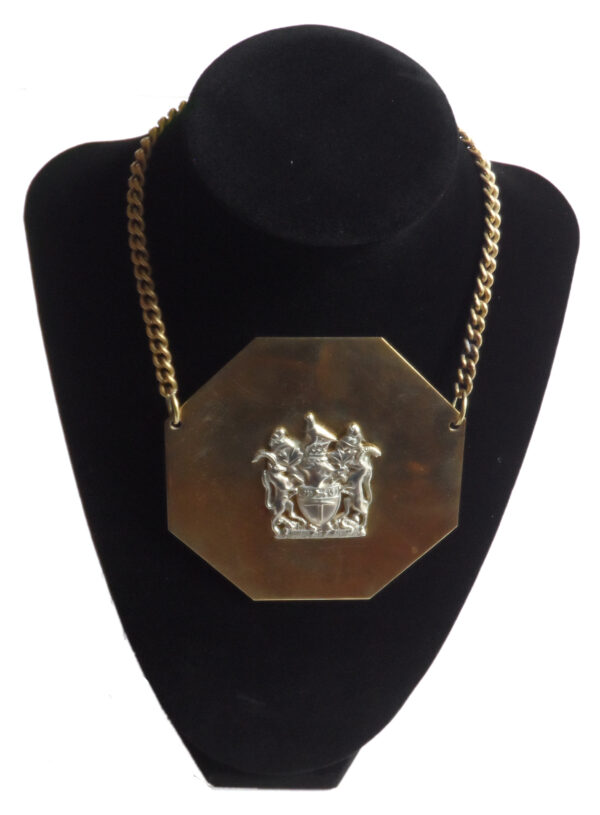
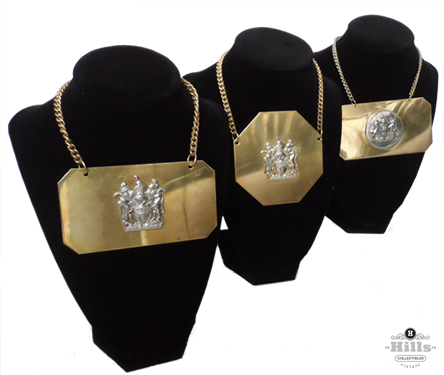
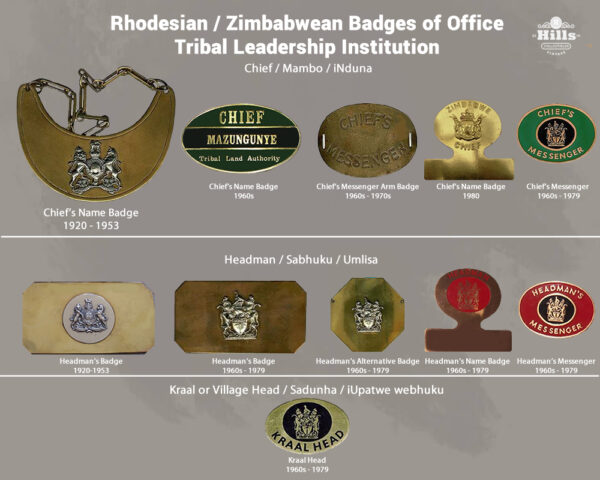
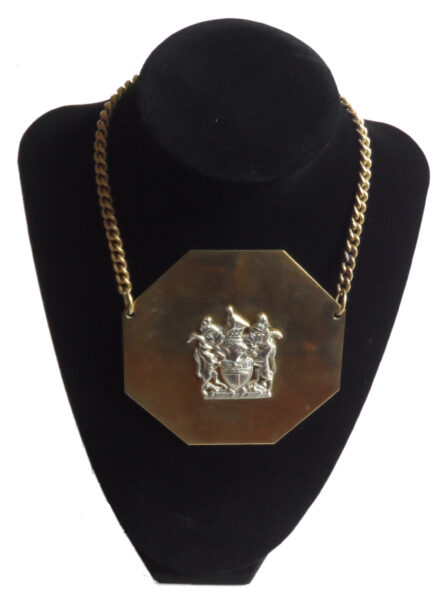
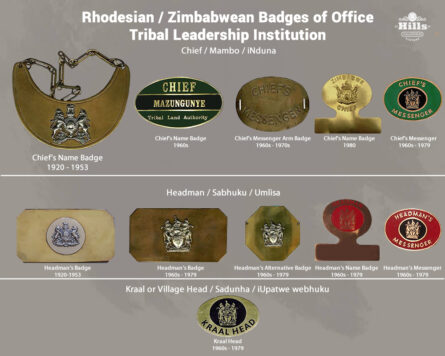
Rare gorget from the 1960s – 1980 era issued to tribal headmen by Rhodesian Ministry of Internal Affairs.
Rarely seen on the open market, as you can imagine only a select few occupied these positions.
Origin: Southern Rhodesia (Zimbabwe)
Time Period: 1960s -1980
Provenance: Private Collection, South Africa
Materials: Brass
Historical & Colonial Context
Following the transition from British South Africa Company (BSAC) rule to a self-governing Crown colony in 1923, the colonial administration implemented a system of local governance utilizing recognized indigenous leaders. Headmen (Sabhuku in Shona / Umlisa in Ndebele)—who managed local village clusters (kraals)—were issued official metal gorgets and badges of authority. Worn suspended around the neck during formal gatherings, native courts (dare), and official assemblies, these gorgets functioned as a visual token of state-sanctioned executive prestige.
Insignia & Design Details Unlike earlier British imperial items bearing royal monograms, this early 1920s–1950s issue features the official Coat of Arms of Southern Rhodesia, which was granted by Royal Warrant on August 11, 1924.
-
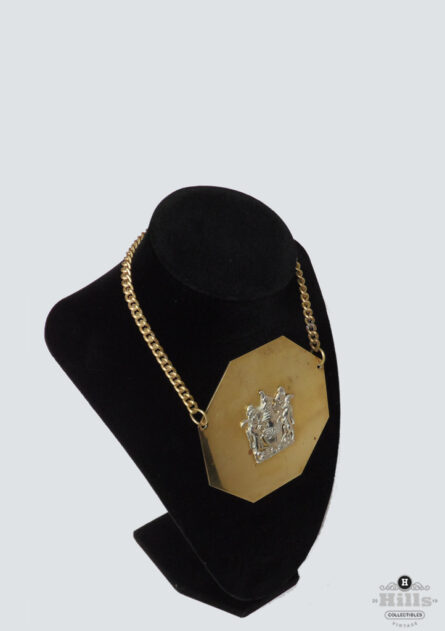
The Silvered Emblem: Features a high-relief silvered centerpiece depicting a central shield charged with a pickaxe (symbolizing the mining and agricultural foundation of the territory) beneath a chief bearing a red lion rampant flanked by Scottish thistles—derived from the personal arms of Cecil Rhodes.
-
The Backplate: Crafted from heavy-gauge, hand-polished brass with distinctive clipped/canted corners, anchored by original brass loops and heavy curb chain link.
Rarity & Collector’s Significance Because these gorgets were official government property returned upon the death or retirement of a Headman, very few entered private hands. Most remaining museum-grade examples are held in institutional archives such as the Imperial War Museum. This piece, sourced from a private collection in South Africa, represents an essential, highly displayable piece of 20th-century Southern African material history.