19th Century Zulu Inhlendla Prestige Swallow Tail Blade Staff
19th Century Zulu Inhlendla Prestige Swallow Tail Blade Staff
$15,000.00 Original price was: $15,000.00.$12,850.00Current price is: $12,850.00.
- Description
- Overview
- ANATOMICAL & COMPOSITIONAL ANALYSIS
Description
Item: Zulu iNhlendla (Royal Swallow-Tail / Winged Blade Staff)
Culture/Region: Zulu Kingdom, Southern Africa
Period: 19th Century (Anglo-Zulu War Era, c. 1870s–1880s)
Provenance: Ex-Private Collection, United Kingdom
Published Documentation: Type featured on TribalArt.com, documented in YouTube research media, and cited in scholarly ethnographic literature.
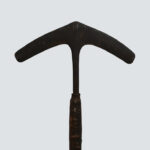
Museum-Quality Zulu Swallow-Tail Ceremonial Staff (iNhlendla / Nhlendla) – Royal Prestige Variant
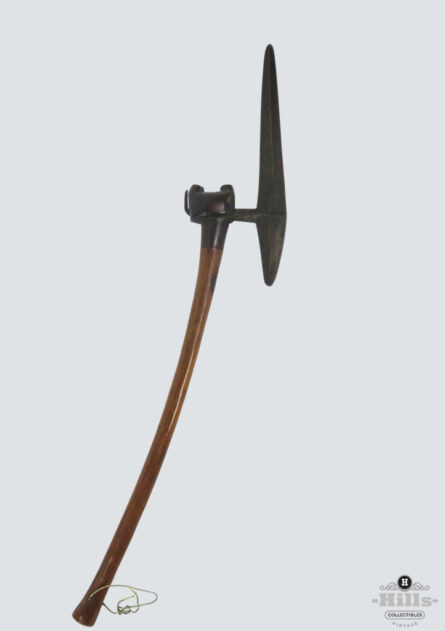
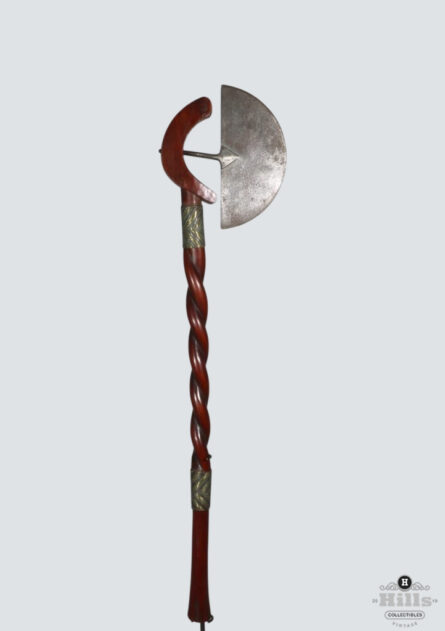
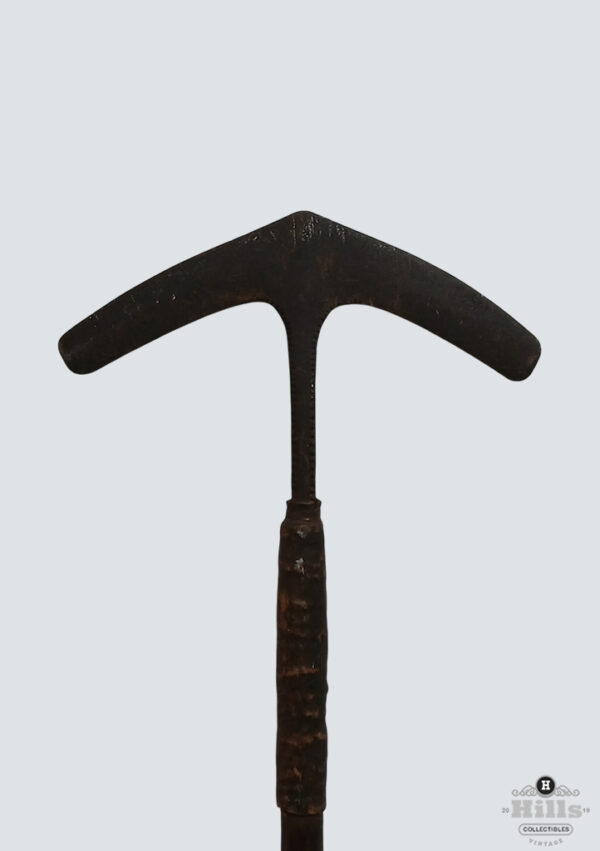
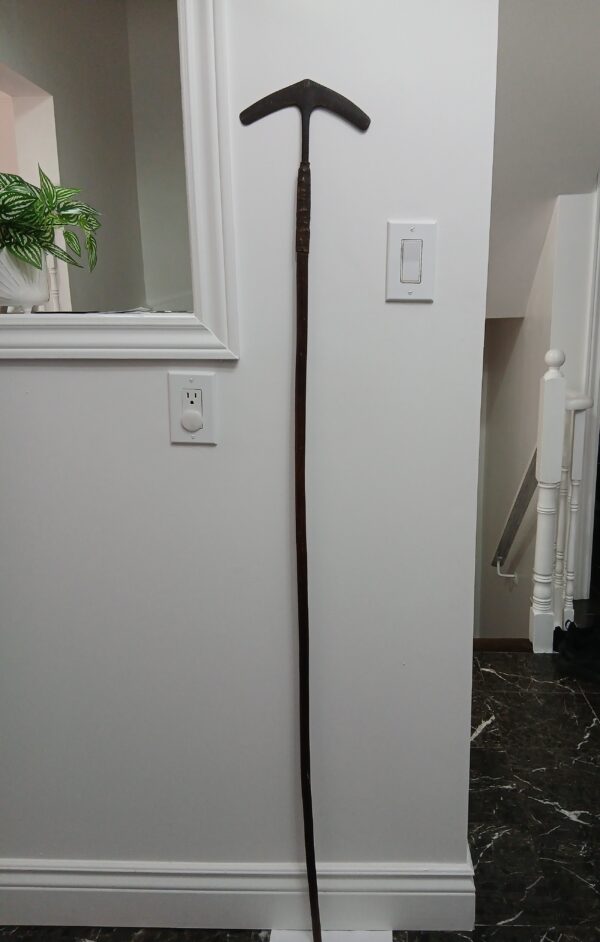
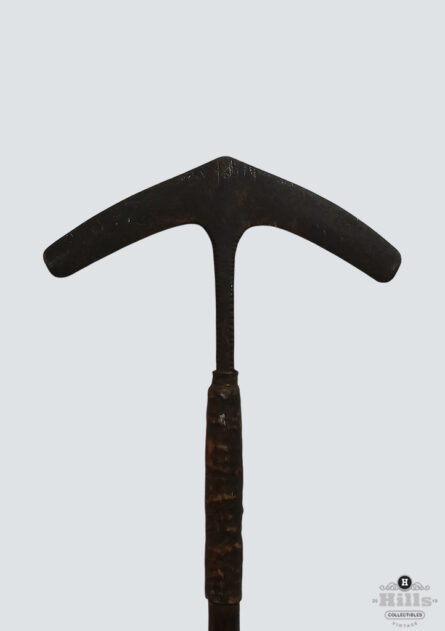
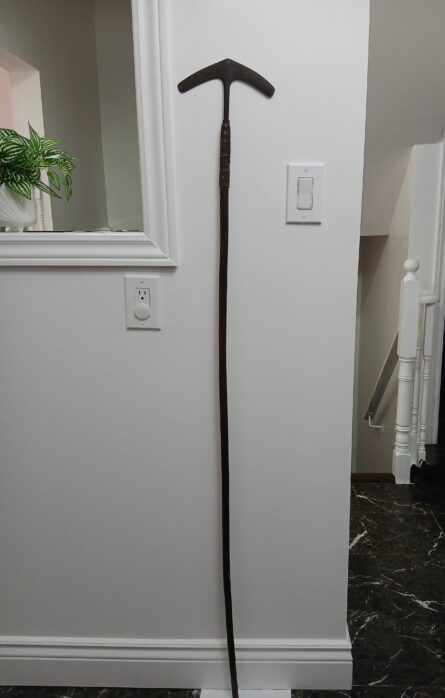
This commanding swallow-tail iNhlendla represents the first and most iconic variant of the prestigious Zulu ceremonial staff. It features a gracefully curved, thin iron blade — elegantly T-shaped or swallow-tailed — inserted directly into the cleft end of a long, straight wooden shaft and secured with traditional wire binding (or rawhide/cow-tail skin in period examples). The blade’s sweeping arc evokes both a predator’s claw and the decisive stroke of royal authority.
Cultural & Historical Significance
The iNhlendla was never a battlefield weapon like the short iklwa stabbing spear. Instead, it served as the ultimate insignia of ubukhosi (chieftainship) — a portable scepter and “ID card” of the Zulu elite. Carried upright by kings, senior indunas, royal princes, and high-ranking envoys, it projected unassailable power and demanded instant deference in assemblies, rituals, and diplomatic encounters.
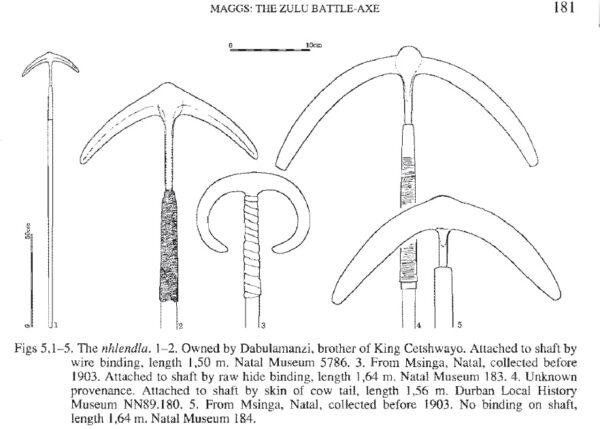
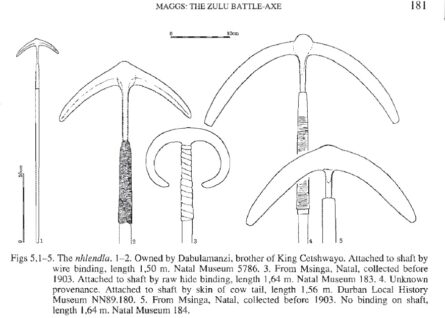
Historical examples include a staff owned by Prince Dabulamanzi kaMpande, brother of King Cetshwayo, now in the Natal Museum (accession 5786, length 1.50 m, wire-bound). Other documented pieces were collected in Msinga, Natal, before 1903 and are preserved in the Natal Museum and Durban Local History Museum.
This form continues in use today: contemporary Zulu monarchs, including King Misuzulu kaZwelithini, wield modern versions (often stainless steel or gold-plated) during major ceremonies such as the Reed Dance (uMkhosi woMhlanga) and royal installations. The swallow-tail motif even appears in South African heraldry as part of the official Zulu royal arms.
Design & Symbolism
- Swallow-tail / curved iron blade — forged thin and elongated, transforming a battle-axe form into a purely symbolic scepter. The sharp tip and sweeping curves hint at latent power while emphasising dignity and command.
- Binding — classic wire wrapping (creating a textured, prestigious grip) or rawhide that shrinks for a tight, weather-resistant seal.
- Slender hardwood shaft — elegantly proportioned for balance and visual impact when carried vertically.
- Deep, generational patina on both iron and wood, reflecting decades (or centuries) of ritual handling.
Scholarly Documentation
This exact variant is illustrated and analysed in Tim Maggs’ seminal paper “The Zulu Battle-Axe” (1993), where multiple nhlendla examples are shown (Figs. 5.1–5), including pieces owned by royalty and collected in Natal before 1903. The paper highlights the nhlendla’s unique hybrid form: a battle-axe blade mounted spear-like on a staff, functioning solely as a symbol of status.
Provenance & Authentication
This piece has been authenticated by recognised Zulu art experts. It carries strong collection history consistent with high-quality 19th-century Zulu regalia. A directly comparable example (158 cm high) was offered at Bonhams Auction (lot 134), underscoring the rarity and market recognition of this royal form.
The iNhlendla Series Context
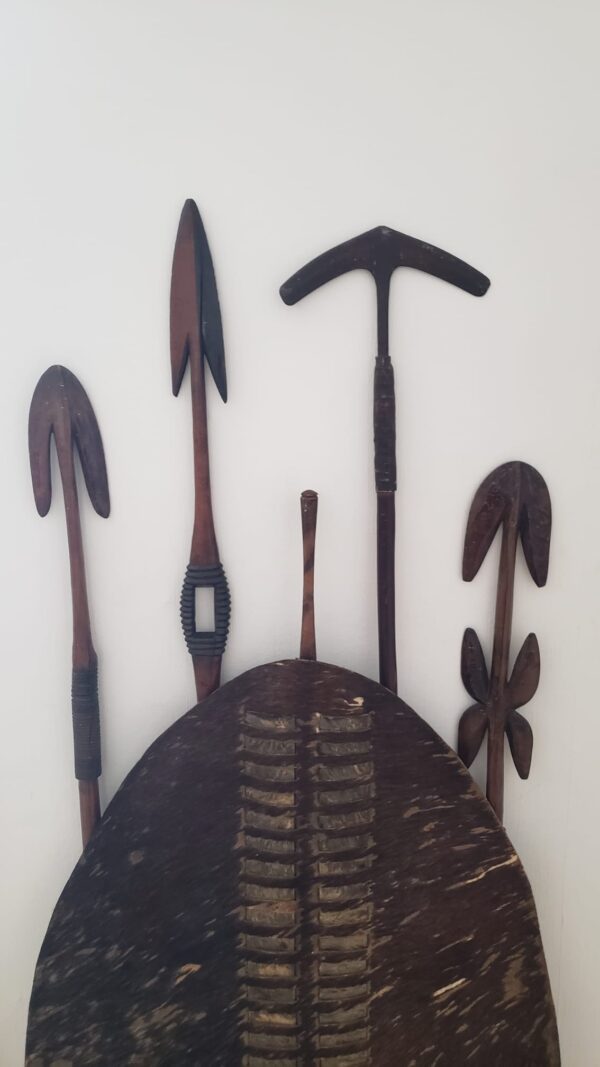
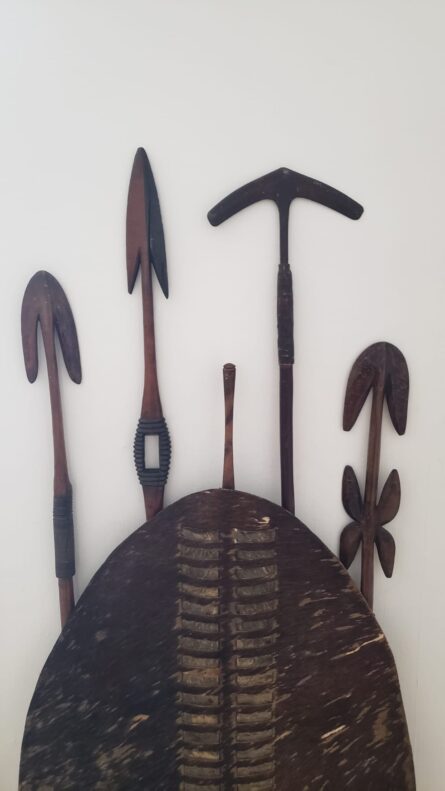
This swallow-tail iron variant is the first in the classic iNhlendla typology we have featured:
- Swallow-tail metal tip — the royal form most associated with Zulu kings and princes (this piece)
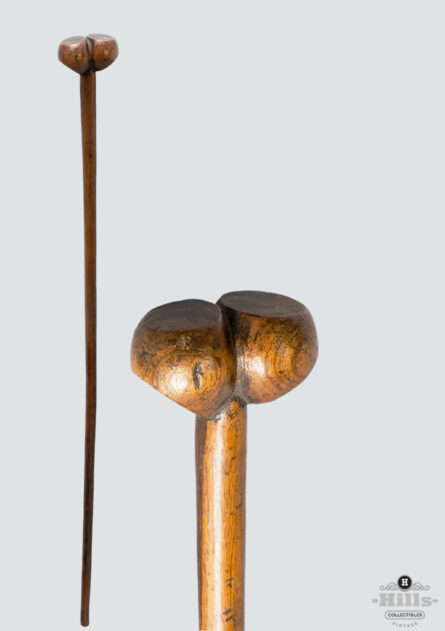
- All-wood spear form with carved arrowhead terminal
- Dramatic all-wood barbed/winged unhlongweni with bull-horn and amasumpa motifs
Each variant carries the same profound spiritual and political weight, functioning as the Zulu equivalent of the Roman aquila — a sacred standard embodying leadership, ancestral power, and the soul of the nation.
1. The Swallow-Tail Blade (The Crown)
-
Architecture: Forged from indigenous iron, the blade features a broad, sweeping crescent configuration reminiscent of a swallow in flight.
-
Textured Tang & Socket: The vertical shank below the winged blade displays deeply chiselled, micro-serrated transverse notches. This intentional patterning reflects skilled smithing techniques reserved for royal armaments.
-
Surface Chemistry & Patina: The iron displays an authentic dark-chocolate and gunmetal-grey patina with untouched oxidation, consistent with genuine 19th-century forge work.
2. The Woven Collar & Binding (The Nexus)
-
Stabilization: The junction between iron tang and wooden shaft is secured with a traditional organic collar binding, likely cow tail binding, protecting the timber from split-stress under movement.
-
Patina & Preservation: The collar shows heavy handling wear and deep hand-rubbed oil patina built up over generations.
3. The Tapered Hardwood Shaft (The Body)
-
Wood Selection: Hand-carved from dense, heavy indigenous ironwood (Umzimbeet / Lethal Timber), selected for tensile strength and resilience.
-
Field Character: Displays natural longitudinal drying grain line checks and subtle surface wear, confirming genuine age, field usage, and environmental exposure.
PROVENANCE, MEDIA & SCHOLARLY CITATIONS
-
Published Reference: Type featured and documented on TribalArt.com.
-
Video Documentation: Type featured in dedicated YouTube visual analysis highlighting its structural details and balance. See: https://www.youtube.com/watch?v=SdqOJCdRvl4&t=5s
-
Academic Reference: Type cited and analyzed in scholarly ethnographic literature on 19th-century Southern African royal paraphernalia – The Zulu battle-axe by Tim Maggs.
-
Collection History: UK, private collection, UK Market.
19th Century Zulu Inhlendla Prestige Swallow Tail Blade Staff
$15,000.00 Original price was: $15,000.00.$12,850.00Current price is: $12,850.00.