Zulu Half Moon Battle Axe (isiZenze) – Bulbous Wooden Head Variant
Zulu Half Moon Battle Axe (isiZenze) – Bulbous Wooden Head Variant
$1,200.00
- Description
- Overview & Historical Context
- Blade & Hafting
Description
Zulu Half Moon Battle Axe (isiZenze) — Bulbous Wooden Head Variant
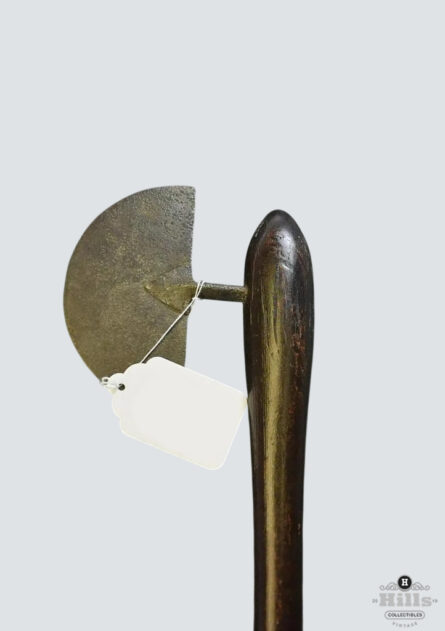
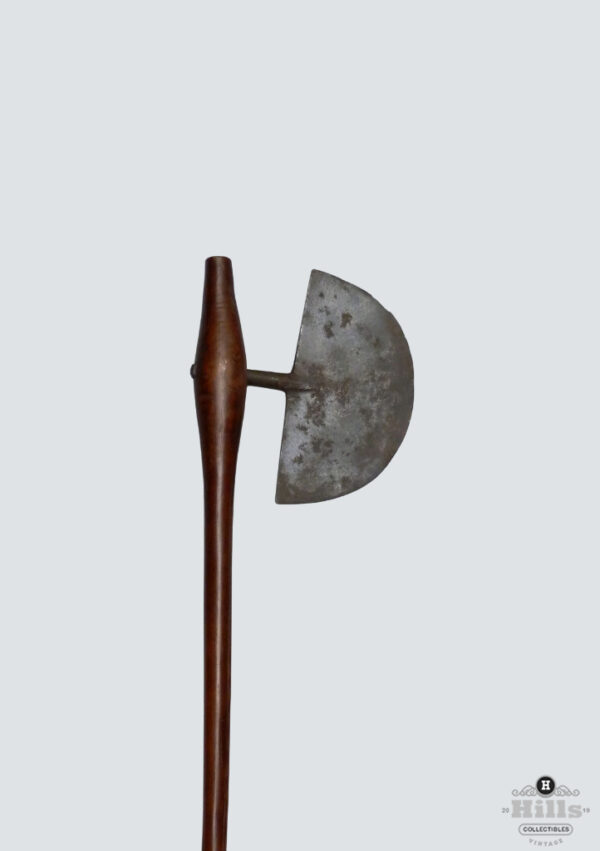
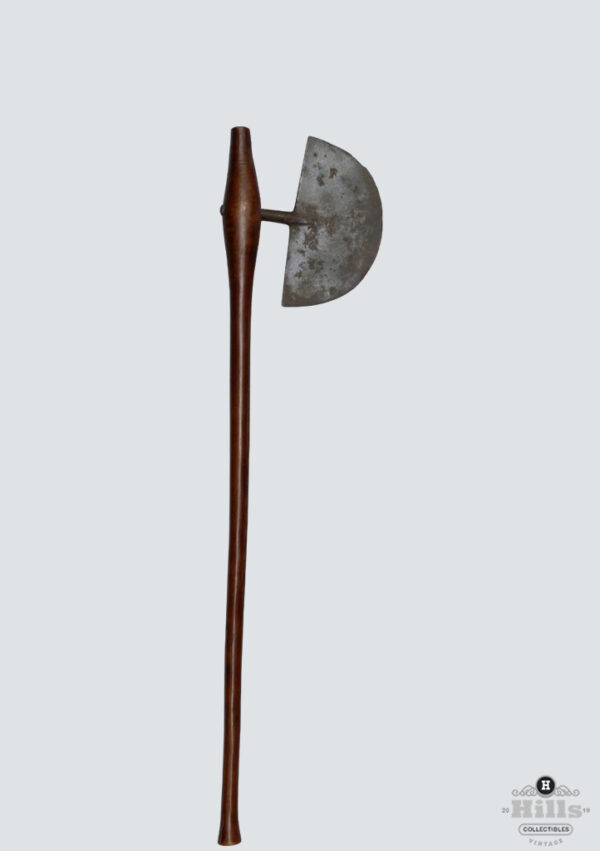
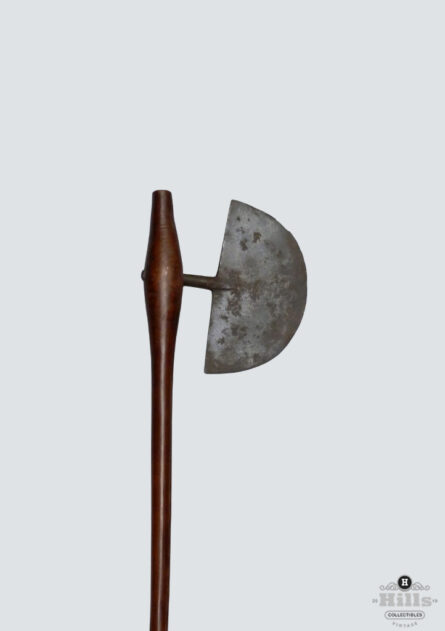
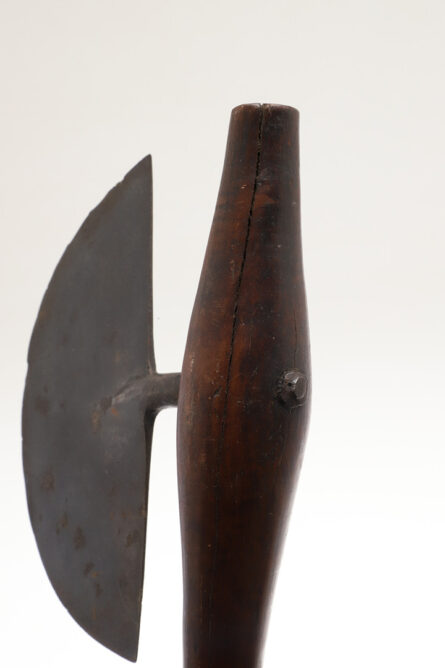
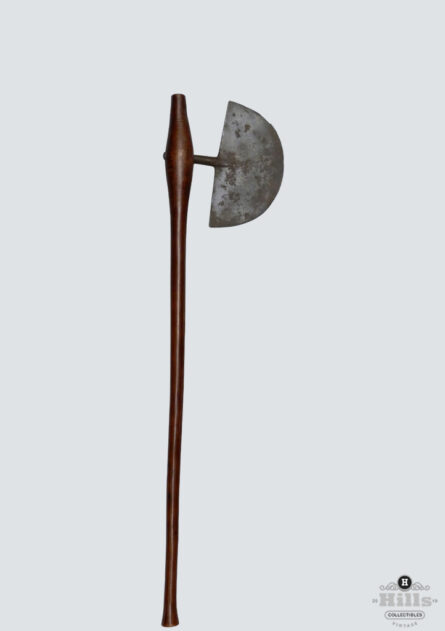
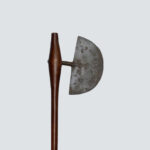
An exceptional, museum-grade example of a 19th-century Zulu crescent-bladed battle axe (isiZenze), distinguished by its extended socket, pierced tang, broad half-moon head, and a prominent bulbous wooden head on the haft matching Dr. Tim Maggs’ typological baseline (Fig. 7, No. 1). Featuring an authentic hand-forged iron blade slot-hafted into an elegantly swollen indigenous hardwood shaft, this piece merges formidable pre-colonial combat utility with high-status royal insignia (ubukhosi). A standout inventory piece for serious collectors of Anglo-Zulu War militaria and African tribal art.
While the short iklwa (stabbing spear) and isihlangu (war shield) dominated standard Zulu military formations, the crescent-bladed battle axe—known natively as the isiZenze or imbemba held an elevated, aristocratic position in Zulu society. Rather than a common foot-soldier’s piece, the battle axe served as a royal emblem, ceremonial prestige object, and mark of rank carried by senior commanders (indunas), lineage heads, and esteemed councilors.
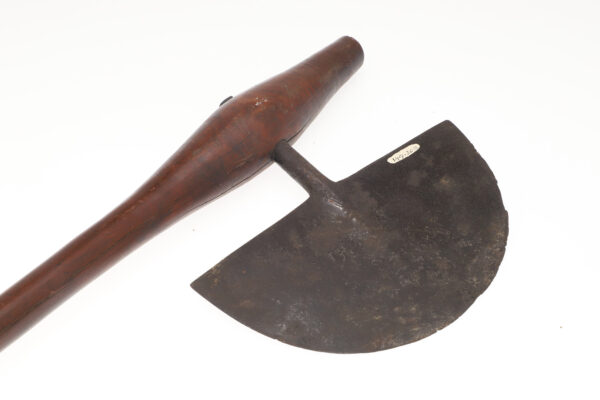
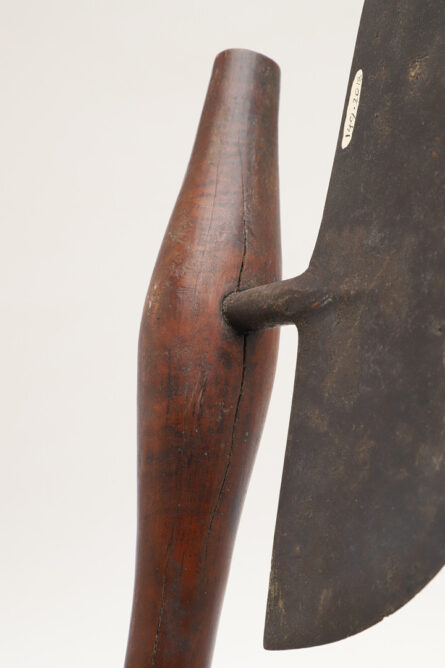
In his landmark academic study, The Zulu Battle-Axe (1993), Dr. Tim Maggs established the deep historical roots of these weapons in KwaZulu-Natal, countering earlier colonial assertions that axes were late regional imports. It features a wide semi-circular cutting edge mounted via a robust central stem that pierces through a carefully carved slot in the thickened, bulbous wooden head of the haft.
Beyond physical utility in elite combat and large game hunting, the crescent blade (isiZenze) carried deep political and ancestral resonance (ubukhosi). Echoing the curves of royal cattle horns and the sacred iNhlendla staff, authentic pieces were historically housed in the sacred msamo (rear section of the Great Hut) to link living leaders with their forebears.
Historical Context & Scholarly References
- Maggs, Tim (1993). “The Zulu Battle-Axe.” Natal Museum Journal of Humanities, Vol. 5, pp. 175–188. (Direct typological comparison: Fig. 7, No. 1, p. 183).
- Lugg, H. C. (1942). Notes on Zulu tribal regalia, ceremonial weapons, and royal praise poetry (izibongo).
- Widstrand, C. G. (1958). African Axes. Studia Ethnographica Upsaliensia 15.
Blade & Metallurgy
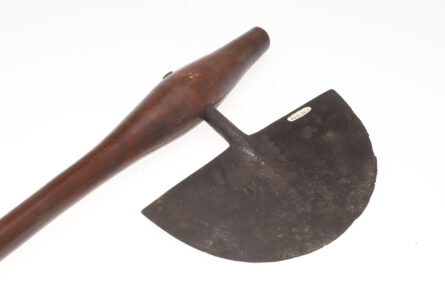
- Broad Half-Moon Head: Features a wide, sweeping half-moon cutting arc that sets it apart from your other inventory variants while utilizing the same structural core.
- Socket Geometry: Built with an extended central forging junction where the blade transitions into the iron tang, offering structural reinforcement.
- Authentic Patina: The blade surface exhibits genuine age-related oxidation, dark patina, and historical tool marks consistent with traditional 19th-century regional smithing.
Hafting & Woodcraft
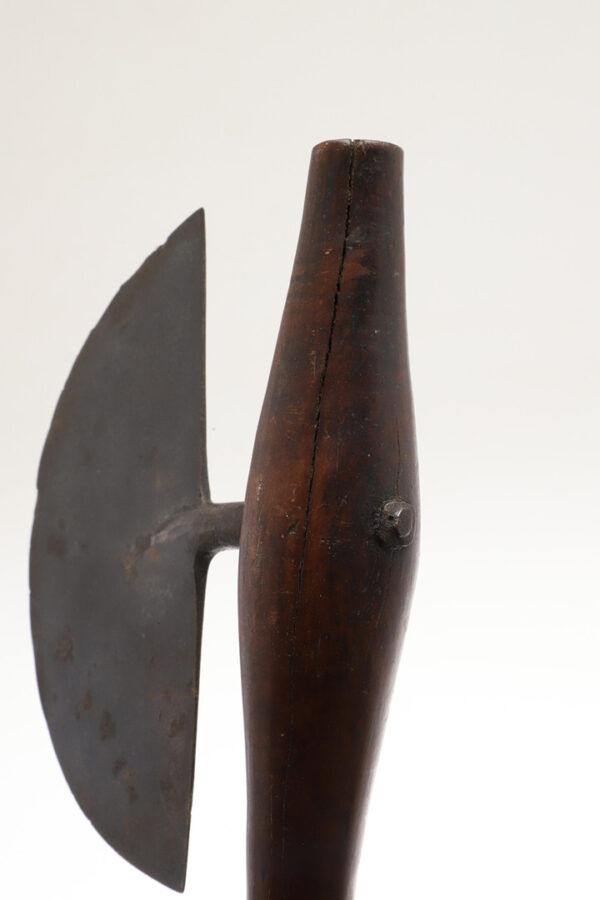
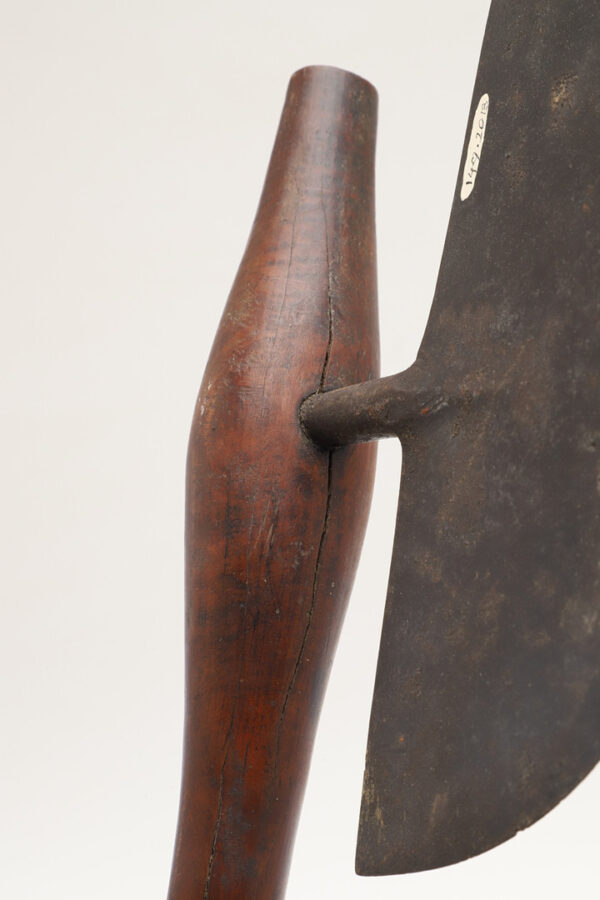
- Bulbous Wooden Head of the Haft: The defining aesthetic feature of this piece; the upper section of the handle is masterfully carved into a pronounced, bulbous wooden head specifically engineered to absorb the mechanical shock of a blow without compromising shaft integrity.
- Dense Indigenous Hardwood: Carved from a single piece of heavy, aged South African hardwood displaying a deep amber-brown luster developed through decades of traditional oil conditioning and handling.
- Period Character: A minor natural drying crack near the bulbous wooden head and socket adds verified period character and authentic wood aging.
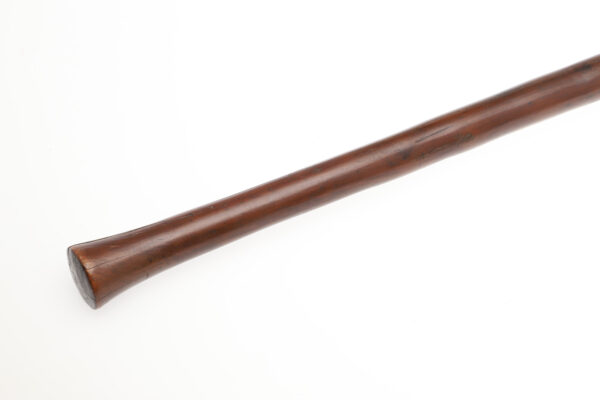
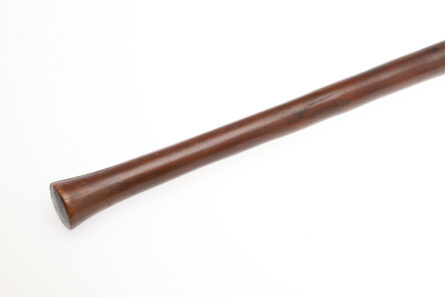
- Grip & Terminal: Cleanly tapered handle terminating in a slightly flared butt to ensure secure handling during ceremonial display
Zulu Half Moon Battle Axe (isiZenze) – Bulbous Wooden Head Variant
$1,200.00